Dinosaurs May Extincted by This
Dinosaurs are the most familiar group of living organisms. Dinosaurs roamed the Earth for 170 million years, after emerging 235 million years ago in the Late Triassic. Why dinosaurs became extinct has always been a hot topic of concern.
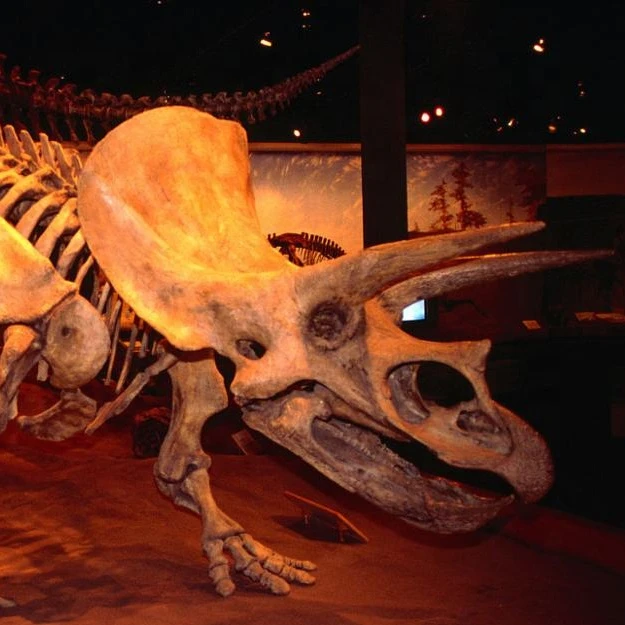
A new study on the dinosaur extinction was published online recently in the Proceedings of the National Academy of Sciences. Researchers at the Chinese Academy of Sciences' Institute of Vertebrate Paleontology and Paleoanthropology and other institutions have found a significant decline in dinosaur diversity in China around 72 million years ago, which is similar to the distribution of dinosaur fossils in western North America. The researchers suggest that the decline in dinosaur diversity during the Late Cretaceous was likely a global phenomenon; The decline in dinosaur diversity may have been an important factor in the extinction of dinosaurs.
For years, scientists have been trying to figure out why dinosaurs disappeared from the Earth.
There are various hypotheses about the cause of the extinction of dinosaurs. The most typical one is that the extinction of dinosaurs was caused by extraterrestrial factors, such as the asteroid impact hypothesis; There are also views that the extinction of dinosaurs was caused by underground factors, such as the Deccan volcano eruption hypothesis in India. Either way, most of these hypotheses are associated with major geological events.
Studying the time and space record of dinosaurs' existence on Earth is the key to solving the mystery of dinosaur extinction. "The incompleteness of the terrestrial stratigraphic record and the differences between regions make it difficult to answer this question." Wang Qiang, corresponding author of the paper and an associate researcher at the Institute of Palaeontology of the Chinese Academy of Sciences.
Shanyang Basin in Shaanxi Province is one of the few continental basins that can study the mystery of dinosaur extinction in Late Cretaceous and Paleocene. Since the 1970s and 1980s, a group of Earth science predecessors led by Xue Xiangxu, a professor at Northwest University, have successively discovered a number of late Cretaceous dinosaur bones, dinosaur eggs and Paleocene mammal fossils in the eastern Qinling Mountains, and initially established the Cretaceous - Paleogene continental stratigraphic framework in this area, laying a foundation for related scientific research. In recent years, researchers have systematically studied paleontology, magnetic stratigraphy and cyclic stratigraphy in Shanyang Basin, Shaanxi Province, providing a new perspective to solve the mystery of dinosaur extinction.
As the main carrier of dinosaur reproduction on the earth, dinosaur eggs can not only reflect the breeding habits of dinosaurs, but also reflect the paleo-environmental information during the survival period of dinosaurs.
The research team systematically collected more than 1,000 in-situ buried dinosaur egg and eggshell specimens from the Shanyang Formation of the Late Cretaceous in Shanyang Basin. According to the types of these dinosaur eggs, they can be mainly divided into Yaotun giant egg, elongate elongate egg and Pingling stack egg. Their parent dinosaurs are oviraptorosaurs and Hadrosaurs respectively.
"The type of eggs is very consistent with the type of dinosaur represented in the Shanyang Basin, where a small number of tyrannosaur and sauropod bones have also been unearthed. The eggs and dinosaur bones show that the diversity of dinosaurs in the basin was at a relatively low level at the time." "Wang Qiang explained.
Meanwhile, the chronological analysis shows that the distribution time of dinosaur fossils in Shanyang Basin is between 68.24 million and 66.38 million years ago. This suggests that the Shanyang Basin's dinosaur diversity remained relatively low for about two million years before its extinction.
Combining dinosaur fossils from other Late Cretaceous basins in the eastern Qinling Mountains, as well as Laiyang in Shandong province and Nanxiong in Guangdong province, the researchers found that there was a significant decline in dinosaur diversity in China around 72 million years ago. Combined with the distribution of dinosaur fossils in western North America, the study suggests that Late Cretaceous dinosaur diversity continued to decline globally.
"The results of this study provide us with a new basis and perspective to understand the process and mechanism of dinosaur extinction." "Dinosaurs are egg-laying animals, and the hatching success rate of their eggs directly determines whether the dinosaur population prospers or not. Dinosaur eggs need the right temperature, humidity and carbon dioxide concentration to hatch."
The study suggests that during the Late Cretaceous period, there was a sustained decline in dinosaur diversity and the group's ability to adapt to the environment was reduced. The decline in dinosaur diversity meant that they were unable to survive the environmental upheavals caused by major disaster events such as the Deccan volcanic eruption or asteroid impact, and eventually went extinct.